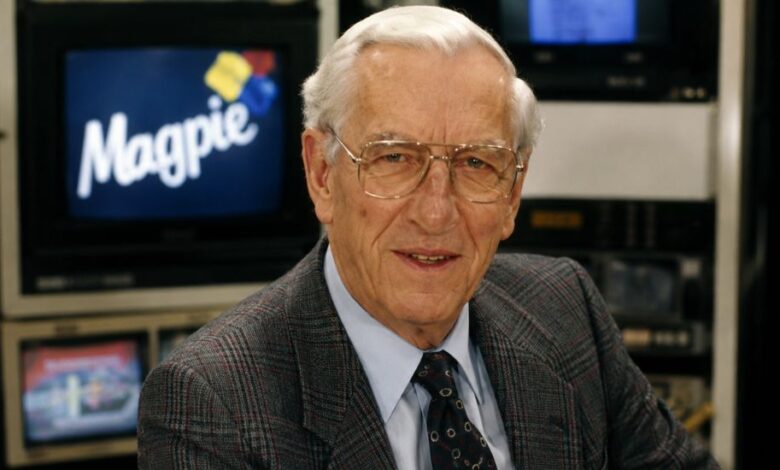
Raymond Baxter remains one of the most respected names in British broadcasting history. Best known as the original presenter of the groundbreaking science and technology television program Tomorrow’s World, Baxter helped bring scientific innovation into millions of homes across the United Kingdom. His distinguished career as a broadcaster, combined with his service as a Royal Air Force pilot during World War II, made him a unique and influential public figure.
In this article, we explore Raymond Baxter’s biography, family life, broadcasting achievements, and the remarkable legacy he left behind.
Quick Bio Table
| Full Name | Raymond Frederic Baxter |
|---|---|
| Known As | Raymond Baxter |
| Date of Birth | 25 January 1922 |
| Place of Birth | Ilford, Essex, England |
| Nationality | British |
| Profession | Television Presenter, Broadcaster, Writer, Commentator |
| Famous For | Presenting Tomorrow’s World |
| Spouse | Sylvia Kathryn Johnson |
| Children | Graham Baxter and Jennifer Douglas |
| Military Service | Royal Air Force (RAF) |
| Rank | Squadron Leader |
| Date of Death | 15 September 2006 |
| Age at Death | 84 Years |
Raymond Baxter Biography
Raymond Frederic Baxter was born on 25 January 1922 in Ilford, Essex, England. From an early age, he developed a fascination with aviation and technology, interests that would later define much of his professional life.
Before becoming a household name on British television, Baxter served his country during World War II. He joined the Royal Air Force and became a skilled fighter pilot, flying the iconic Spitfire aircraft. His military service earned him significant respect and provided him with firsthand experience in aviation, a subject he would continue to cover throughout his broadcasting career.
After the war, Baxter transitioned into media and broadcasting. His confidence, intelligence, and clear communication style quickly distinguished him from many of his contemporaries. Over time, he became one of the BBC’s most recognizable personalities.
Early Life and Education
Although much of Raymond Baxter’s early education remained private, his upbringing during a period of major technological and social change influenced his lifelong curiosity about innovation. Growing up in England during the interwar years exposed him to rapid developments in science and engineering.
His passion for aviation became evident at a young age, eventually leading him to join the RAF. The discipline and experience he gained during military service would later contribute to his professional success as a broadcaster and commentator.
Military Career and World War II Service
One of the most fascinating aspects of Raymond Baxter’s biography is his distinguished military career. During World War II, he served as a fighter pilot in the Royal Air Force and flew combat missions against enemy targets.
As a Squadron Leader, Baxter participated in dangerous operations and gained valuable aviation expertise. His experience flying Spitfires and engaging in wartime missions gave him credibility that later proved invaluable when covering aviation and aerospace developments for television audiences.
Unlike many television personalities, Baxter had firsthand knowledge of the technologies and aircraft he discussed. This authenticity helped establish him as a trusted voice in British broadcasting.
Raymond Baxter Career in Broadcasting
Following the conclusion of World War II, Raymond Baxter began building a successful career in broadcasting. His articulate speaking style and commanding presence quickly attracted attention.
Throughout the 1950s and 1960s, he became involved in covering major national events. He worked on radio and television broadcasts that reached audiences across Britain.
His commentary work included coverage of important state occasions and public ceremonies. Baxter became known for delivering information clearly and professionally, qualities that made him one of the BBC’s most dependable broadcasters.
The Success of Tomorrow’s World
Raymond Baxter’s career reached new heights when he became the first presenter of Tomorrow’s World in 1965.
The program focused on science, innovation, and emerging technologies. At a time when many people had limited access to information about scientific developments, the show provided viewers with exciting glimpses into the future.
Baxter’s enthusiasm and ability to explain complex concepts in simple language made him the perfect host. Under his leadership, Tomorrow’s World became one of Britain’s most influential television programs.
The show introduced audiences to numerous innovations that eventually became part of everyday life, including:
- Early computer technology
- Pocket calculators
- Microwave ovens
- Modern telecommunications
- Aviation advancements
- Consumer electronics
Many viewers credited Baxter with inspiring their interest in science, engineering, and technology.
Aviation Expertise and Aerospace Reporting
Beyond Tomorrow’s World, Raymond Baxter became one of Britain’s leading aviation commentators.
Thanks to his RAF background, he possessed a deep understanding of aircraft design, flight operations, and aerospace engineering. This expertise made him a natural choice for reporting on major aviation events.
One of the most notable periods of his career involved coverage of Concorde, the supersonic passenger aircraft that represented a major technological achievement for Britain and France.
Baxter’s commentary on Concorde and other aerospace developments helped educate viewers about the future of aviation. His ability to combine technical knowledge with engaging storytelling made complex subjects accessible to general audiences.
Raymond Baxter Family
Many people searching for information about Raymond Baxter family want to know more about his personal life.
Raymond Baxter married Sylvia Kathryn Johnson in September 1945 shortly after World War II. Their marriage lasted for more than five decades and remained an important part of his life.
The couple had two children:
- Graham Baxter
- Jennifer Douglas
Despite his public profile, Baxter generally kept family matters private. Unlike many modern celebrities, he rarely sought publicity for his personal life and preferred to focus public attention on his professional work.
Friends and colleagues often described him as a dedicated family man who valued his relationships away from the spotlight.
Writing and Other Professional Work
In addition to broadcasting, Raymond Baxter also worked as a writer and contributor to various media projects.
His extensive knowledge of aviation and science enabled him to participate in documentaries and educational programs. He remained active in promoting scientific understanding and technological awareness throughout his career.
His contributions extended beyond television presentation. Baxter helped shape public discussions about innovation and encouraged audiences to embrace scientific progress.
Awards, Recognition, and Influence
Although Raymond Baxter was not someone who actively sought fame, his achievements earned widespread respect.
His influence can be seen in generations of science presenters who followed him. Many broadcasters adopted his approach of making complex subjects understandable and engaging for ordinary viewers.
His work demonstrated that science programming could be both educational and entertaining. This philosophy continues to influence television production today.
Baxter became synonymous with trust, expertise, and professionalism, qualities that remain highly valued in journalism and broadcasting.
Raymond Baxter’s Legacy
Raymond Baxter’s legacy extends far beyond television.
He played a key role in making science and technology accessible to the public during a period of rapid innovation. Through Tomorrow’s World and his many other broadcasting projects, he helped viewers understand how scientific advances could shape the future.
His military service, broadcasting excellence, and passion for education combined to create a career that remains admired decades later.
Even after his passing in 2006, Baxter continues to be remembered as one of Britain’s most influential science communicators. His contributions helped inspire future scientists, engineers, broadcasters, and innovators.
For readers interested in broadcasting history, science communication, and British television, Raymond Baxter remains a fascinating figure whose impact continues to be felt today.
At Market Brizz, we celebrate influential personalities whose work has shaped industries and inspired generations. Raymond Baxter stands as an outstanding example of how curiosity, expertise, and dedication can leave a lasting mark on society.
You may also read: Tony Bastable Biography: Career, Television Success and Cause of Death