
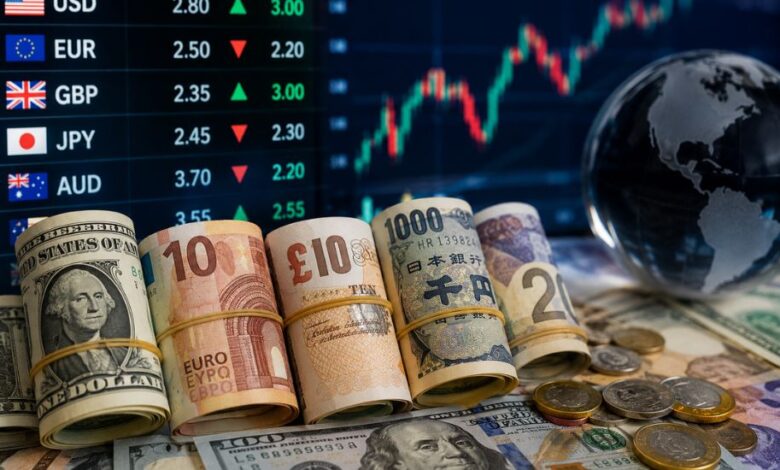
In today’s interconnected global economy, foreign currencies play a vital role in international trade, travel, investment, and economic growth. One term that frequently appears in discussions about currency exchange, particularly in Turkish-speaking regions, is döziv. While many people use the term interchangeably with foreign exchange concepts, understanding what döziv represents can help individuals and businesses make better financial decisions.
Whether you are a traveler exchanging money, an investor monitoring currency fluctuations, or a business involved in international transactions, learning about döziv can provide valuable insights into how global financial markets operate. This article explores the meaning of döziv, its significance, the factors influencing exchange rates, and its impact on everyday life.
Quick Bio Table
| Detail | Information |
|---|---|
| Term | Döziv |
| Category | Finance |
| Related Concept | Foreign Exchange (Forex) |
| Purpose | Currency Exchange and International Transactions |
| Used In | Banking, Trade, Travel, Investments |
| Main Function | Converting one currency into another |
| Importance | Supports global commerce and economic activity |
| Popular Related Terms | Exchange Rate, Forex, Currency Trading |
| Audience | Investors, Businesses, Travelers, Economists |
What Is Döziv?
Döziv is commonly associated with the concept of foreign exchange, which refers to the conversion of one country’s currency into another. Foreign exchange markets allow individuals, businesses, governments, and financial institutions to buy and sell currencies based on current market values.
The foreign exchange market is one of the largest financial markets in the world, with trillions of dollars exchanged daily. Through döziv transactions, businesses can pay international suppliers, tourists can exchange money for travel, and investors can diversify their portfolios across global markets.
The value of currencies changes continuously due to economic, political, and market-related factors. These fluctuations create opportunities and risks for those involved in international financial activities.
Why Döziv Is Important
Döziv plays an essential role in the modern economy. Without currency exchange systems, international trade and investment would be significantly more complicated.
Some of the key reasons why döziv is important include:
Facilitating International Trade
Businesses that import and export goods rely on foreign currency exchanges to conduct transactions. Companies often need to convert their local currency into the currency used by suppliers or customers abroad.
Supporting Global Travel
When people travel internationally, they must exchange their home currency for the currency used in their destination country. Döziv services make this process possible.
Encouraging Investment
Investors often purchase assets in foreign markets. To do so, they need access to foreign currencies. Döziv enables the movement of capital across borders.
Influencing Economic Growth
Currency values affect exports, imports, inflation, and employment. Governments and central banks closely monitor exchange rates because they influence economic performance.
How Döziv Works
The process of currency exchange is relatively straightforward. A person or business exchanges one currency for another based on the current exchange rate.
For example:
- A traveler exchanges euros for U.S. dollars.
- A company converts Turkish lira into British pounds.
- An investor buys Japanese yen to invest in Japanese assets.
The exchange rate determines how much of one currency can be obtained for another. These rates change continuously due to market demand and supply.
Understanding Exchange Rates
Exchange rates are the foundation of döziv transactions. They represent the value of one currency relative to another.
For example:
- 1 USD = 0.90 EUR
- 1 EUR = 1.11 USD
Exchange rates can move up or down depending on various economic conditions.
Fixed Exchange Rates
Some countries maintain fixed exchange rates by linking their currency to another currency or a basket of currencies.
Floating Exchange Rates
Most major economies use floating exchange rates. In this system, currency values are determined by market forces.
Managed Exchange Rates
Certain governments intervene occasionally to stabilize their currency while still allowing market participation.
Factors That Affect Döziv Rates
Many factors influence currency values in foreign exchange markets.
Inflation
Countries with lower inflation rates generally experience stronger currencies because their purchasing power remains relatively stable.
Interest Rates
Higher interest rates often attract foreign investment, increasing demand for a country’s currency.
Economic Growth
Strong economic performance usually boosts investor confidence and strengthens currency value.
Political Stability
Political uncertainty can create market volatility and reduce confidence in a currency.
Government Policies
Fiscal and monetary policies implemented by governments and central banks can significantly impact exchange rates.
Global Events
Wars, pandemics, financial crises, and geopolitical developments can lead to major currency fluctuations.
Döziv and International Business
For businesses operating globally, döziv is more than just currency conversion. Exchange rate movements can affect profits, costs, and competitiveness.
For example:
- A stronger domestic currency may make exports more expensive.
- A weaker currency can increase import costs.
- Exchange rate volatility may create financial uncertainty.
Many companies use hedging strategies to manage currency-related risks and protect profits.
Döziv and Personal Finance
Individuals are also affected by currency movements, often without realizing it.
Travel Expenses
Exchange rates determine how much purchasing power travelers have abroad.
Online Shopping
Purchasing products from international websites often involves currency conversion.
Overseas Education
Students studying abroad may face changing costs due to exchange rate fluctuations.
International Remittances
People sending money to family members in other countries rely on foreign exchange services to transfer funds.
The Relationship Between Döziv and Forex Trading
Forex trading is one of the most popular financial activities globally. Traders speculate on currency price movements in hopes of generating profits.
Unlike traditional stock markets, forex markets operate almost 24 hours a day because trading occurs across multiple international financial centers.
Popular currency pairs include:
- EUR/USD
- GBP/USD
- USD/JPY
- USD/CHF
Forex trading offers opportunities but also involves substantial risk due to market volatility.
Advantages of Understanding Döziv
Learning about döziv can provide several benefits:
Better Financial Decisions
Understanding exchange rates helps individuals manage travel budgets and international purchases more effectively.
Improved Investment Knowledge
Investors can better evaluate opportunities in foreign markets.
Enhanced Business Planning
Companies can develop strategies to reduce currency risks and improve profitability.
Increased Economic Awareness
Knowledge of foreign exchange markets provides a deeper understanding of global economic trends.
Challenges Associated with Döziv
Despite its importance, döziv also presents challenges.
Market Volatility
Currency values can change rapidly, creating uncertainty.
Transaction Costs
Banks and exchange providers often charge fees or offer less favorable exchange rates.
Economic Risks
Unexpected economic events can impact currency markets significantly.
Speculative Activity
Large-scale speculation may contribute to short-term currency fluctuations.
The Future of Döziv
As technology continues to transform financial services, the future of döziv is expected to become increasingly digital.
Online banking platforms, mobile payment systems, and digital financial services have already made currency exchange faster and more accessible. Artificial intelligence and advanced analytics are helping institutions manage currency risks more effectively.
In addition, the growing popularity of digital payment solutions and emerging financial technologies may further reshape how people exchange currencies and conduct international transactions.
Governments, businesses, and consumers will continue relying on efficient foreign exchange systems to support global commerce and economic growth. As international connections expand, the relevance of döziv is likely to increase even further.
Conclusion
Döziv remains an essential component of the global financial system. It enables international trade, supports travel, facilitates investments, and connects economies worldwide. Understanding how currency exchange works can help individuals make informed financial decisions and allow businesses to navigate global markets more effectively.
Whether you are a traveler, investor, entrepreneur, or simply interested in economics, learning about döziv provides valuable insights into one of the most important mechanisms driving the modern economy. As financial markets evolve and technology advances, the role of döziv will continue to grow in importance. At Market Brizz, we believe that understanding foreign exchange concepts is a crucial step toward making smarter financial decisions in an increasingly globalized world.
